Green Politics

President to Create National Ocean Policy
Oil continues to plague the Gulf of Mexico, but press reports indicate that today President Obama will adopt a new policy that provides hope for the future of our seas. Like the groundbreaking Clean Water Act and the Clean Air Act, this national policy will transform the way we manage our oceans and Great Lakes – helping us protect and restore our marine resources.
A Stronger Moratorium On New Oil Drilling
On July 12, 2010, eighty-three days after BP’s Deepwater Horizon drilling rig blew up and killed 11 workers, Department of the Interior Secretary Ken Salazar issued his second moratorium on new drilling for oil on the U.S. Outer Continental Shelf in the Gulf of Mexico. You can find Secretary Salazar’s Decision Memorandum here, and a Q and A prepared by the Department of the Interior here. This new moratorium will last, at most, to November 30, 2010.
Development Outpacing Efficiency in China
There is a fascinating - and terrifying - race going on in China.
The government has displayed an extraordinary commitment to cutting carbon emissions and eliminating industrial waste. In the past three years, they have shut down more than 1000 inefficient coal-fired power plants. They have become the world's biggest investor in clean energy technology. And they have recently adopted world-class efficiency standards for both automobiles and lighting.
A Win For Fishermen, A Win For Ocean Health
This bill (like the House version introduced in March) provides environmentally beneficial job opportunities for fishermen. It increases support for cooperative research management and monitoring projects that improve ocean science (such as identifying and protecting essential fish habitat).
Big Economies Agree to Phase Out Fossil Fuel Subsidies
Leaders of the world's 20 biggest economies met at the G20 Summit in Toronto over the weekend, and, on Sunday, they made a collective pledge to clean up energy policy.
The joint statement (.pdf) calls for a "phase out over the medium term of inefficient fossil fuel subsidies that encourage wasteful consumption, taking into account vulnerable groups and their development needs."
Open Season On Risk For Gulf Residents
Today, in a decision that increases the risk of another uncontrollable oil well blowout, U.S. District Court Judge Martin Feldman of New Orleans, Louisiana, issued an injunction that halts enforcement of the Obama Administration’s six-month moratorium
Oil Bosses Distance Themselves From BP
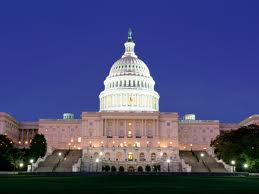
Oil company executives gathered on Capitol Hill on Tuesday at a Congressional hearing to discuss offshore drilling and the oil spill in the Gulf of Mexico.
Leaders from ExxonMobil, Shell, Conoco-Phillips, and Chevron sat next to Lamar McKay, head of BP America, but they answered questions with the intention of isolating BP.
Senate Rejects Attempt To Limit EPA Authority
After a Senate vote on Thursday, the Environmental Protection Agency has maintained the power to regulate greenhouse gas pollution.
Murkowski Thinks Polluters Can Police Themselves
This Thursday, lawmakers will likely vote on Senator Lisa Murkowski’s resolution to undercut the government’s authority to regulate global warming pollution.
I find it shocking that Senator Murkowski is moving forward with this resolution now - even as oil continues to flow into the Gulf of Mexico seven weeks after BP’s Deepwater Horizon blowout.
Oil Spill Solutions: A Nuclear Option?
According to Wednesday's New York Times, the US government is not considering the possibility of detonating a nuclear bomb close to the source of the Deepwater Horizon oil spill.
People have been talking about it, though. On CNN last week, for example, anchor John Roberts suggested that we "drill a hole, drop a nuke in and seal up the well.”